

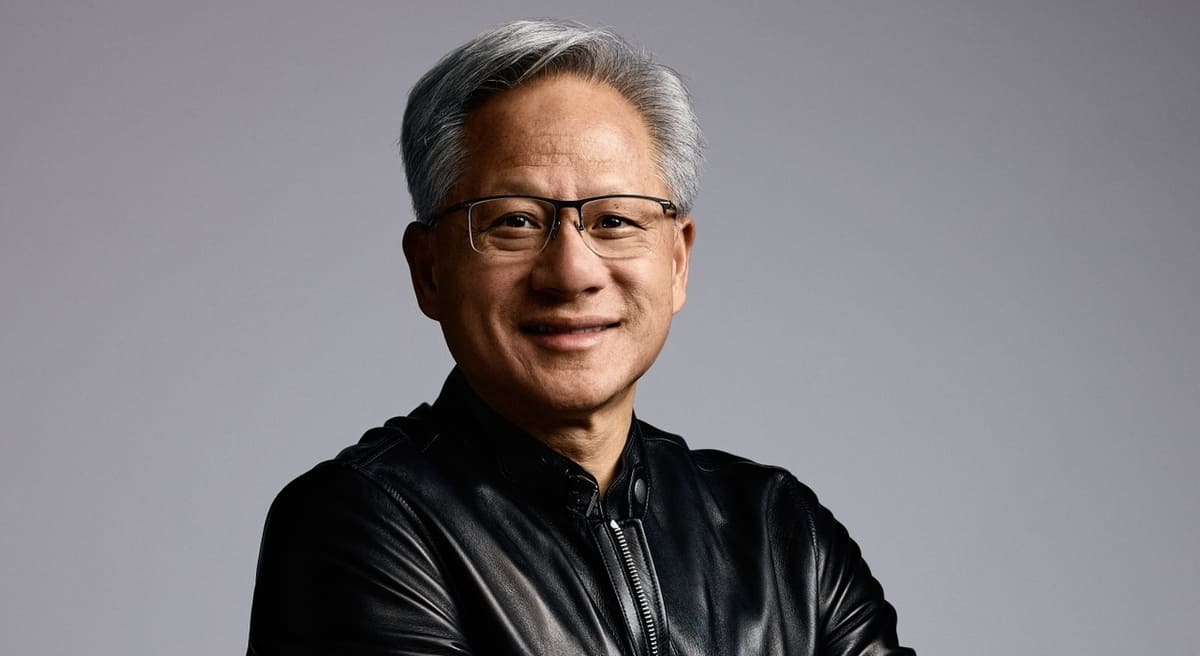
How NVIDIA-Powered AI Factories are Redefining the Global Enterprise Tech Landscape
The “AI Factory” has emerged as the essential infrastructure for the agentic era, transitioning AI from experimental silos to operationalized enterprise engines. By integrating NVIDIA’s Blackwell architecture with Cisco’s secure networking, organizations are now compressing deployment timelines from months to weeks. This acceleration is driven largely by the Cisco Nexus Hyperfabric, which simplifies the transition from the central data center to the furthest edge while securing the mission-critical data that fuels modern autonomy.
RMN Digital Enterprise Desk
New Delhi | May 23, 2026
1. Introduction: The Rise of the Software-Defined AI Factory
The “AI Factory” is no longer a metaphor for high-density compute; it is a strategic framework where data serves as the raw material and actionable intelligence is the refined product. For the modern enterprise, this shift is the prerequisite for the “agentic era,” a phase where autonomous AI agents move beyond simple chatbots to become integrated components of the workforce. To survive this transition, organizations must move away from viewing AI as a peripheral experiment and toward treating it as a core production engine.
NVIDIA founder and CEO Jensen Huang has correctly identified this as a “silicon-to-software” revolution. In his view, every industry is being redefined through integrated AI infrastructure that demands security at every layer. This is not merely about faster chips; it is about a software-defined architecture that protects the integrity of the model and the privacy of the data. As enterprises look to scale, the immediate strategic priority is moving this intelligence out of the silo and closer to where data is born: the edge.
2. Moving to the Edge: Decentralizing Enterprise Intelligence
For sectors like healthcare, warehousing, and transportation, “edge inferencing” is a tactical necessity, not a luxury. Real-time decision-making—whether in a surgical suite or an autonomous logistics hub—cannot tolerate the latency of backhauling data to a central cloud. Cisco and NVIDIA have addressed this by expanding the “Secure AI Factory” to the edge, integrating NVIDIA RTX PRO 4500 Blackwell Server Edition GPUs into Cisco’s UCS and Unified Edge portfolios. From an analyst’s perspective, the RTX PRO 4500 is a masterstroke in efficiency, offering the compute density required for mission-critical AI without the massive energy footprint or cooling requirements of traditional data center hardware.
The transition to a decentralized model is underpinned by new technical benchmarks that provide carrier-grade reliability:
- The Switching Standard: The rollout of the 102.4Tbps Cisco N9100, powered by NVIDIA Spectrum-6 silicon, alongside the now generally available 800G N9100, provides the massive bandwidth required for scale-out AI.
- The Cisco AI Grid: This specialized reference design allows service providers to offer managed edge AI services, creating a standardized “grid” for intelligence.
- Operational Simplicity: The Cisco Nexus Hyperfabric acts as the connective tissue, turning what used to be a nightmare of multi-vendor integrations into a manageable, full-stack solution.
However, these hardware advancements expand the enterprise attack surface, necessitating a “fused” approach to security where protection is built into the very silicon that processes the data.
3. The Security Fabric: Fusing Protection into the AI Infrastructure
As AI agents gain autonomy, traditional perimeter security—the “castle and moat” model—becomes obsolete. Modern risks are internal; an autonomous agent with broad access could inadvertently or maliciously compromise sensitive data. Traditional security software also competes for CPU cycles, which are better spent on the AI workloads themselves.
The strategic response is the implementation of the Hybrid Mesh Firewall on NVIDIA BlueField DPUs (Data Processing Units). By offloading security policy enforcement to the DPU, enterprises “air-gap” the security layer from the application environment. This ensures that threats are blocked at the server level before they reach the data, all while preserving the host CPU for maximum AI performance. Supporting this is “Cisco AI Defense,” which provides specialized guardrails for multi-agent systems, and NVIDIA’s “OpenShell” platform. OpenShell acts as a critical governance layer, allowing developers to define strict operational parameters for autonomous agents. This secure framework is the foundational requirement for the “Sovereign AI” movements taking hold globally.
4. Global Implementation: Sovereign AI and Industrial Blueprints
The rise of “Sovereign AI” is a geopolitical and economic shift toward national digital self-reliance. By building domestic AI factories, nations ensure data residency and comply with local laws while fostering an “AI-enabled economy.” This is particularly evident in the contrasting but complementary models of Australia and India.
| Feature | Australia (Sharon AI / Cisco) | India (Industrial Giants) |
| Infrastructure Scale | 1024 NVIDIA Blackwell Ultra GPUs. | Part of a $134 billion manufacturing investment. |
| Strategic Partners | VAST Data (Storage), NEXTDC (Sovereign Hosting). | Reliance, Tata, Hero MotoCorp, Addverb Technologies. |
| Software Core | Sharon AI “Sandbox” for POCs. | Siemens, Synopsys, and Cadence integrated with Omniverse. |
| Key Objectives | Alignment with National AI Plan; APAC government innovation. | “Physical AI”; Digital Twins; Software-defined manufacturing power. |
| Technical Win | High-performance sovereign data residency. | 6x faster fluid dynamic simulations for Havells India. |
In India, the AI factory is producing “Physical AI”—the training of humanoid and quadruped robots. Companies like Addverb Technologies are using NVIDIA Cosmos world foundation models to train robots in simulated Omniverse environments before they ever touch a physical factory floor. This “Cognitive Twin” approach is being scaled by Tata Consultancy Services (TCS) for infrastructure projects like the National High Speed Rail Corporation. Furthermore, the collaboration is even “closing the loop” on hardware: Larsen & Toubro Semiconductor is utilizing Cadence software accelerated by NVIDIA GPUs to shorten the design cycles for the next generation of AI chips.
5. Conclusion: From Experimentation to Operationalization
We have reached what Mary Johnston Turner, Global Lead at IDC, describes as a critical “inflection point.” The partnership between NVIDIA and Cisco is the catalyst for moving AI from experimental silos into a standardized, operationalized engine.
The overarching impact is the ability to scale safely. By simplifying infrastructure through the Cisco Nexus Hyperfabric and securing it via BlueField DPUs, the enterprise tech landscape is shifting toward a software-defined manufacturing and operational model. As we enter the age of agentic AI, the global standard will be defined by those who can build secure, high-speed factories that transform raw data into a competitive, sovereign intelligence.