
Musk v. OpenAI Verdict: Jury Rejects Claims as Statute of Limitations Lapses
A California jury has unanimously rejected Elon Musk’s legal challenge against OpenAI, finding that the billionaire failed to file his claims within the required legal timeframe. This verdict effectively ends the immediate threat of a $150 billion financial reset and solidifies Sam Altman’s leadership over the $850 billion artificial intelligence giant.
RMN Digital Legal Desk
New Delhi | May 19, 2026
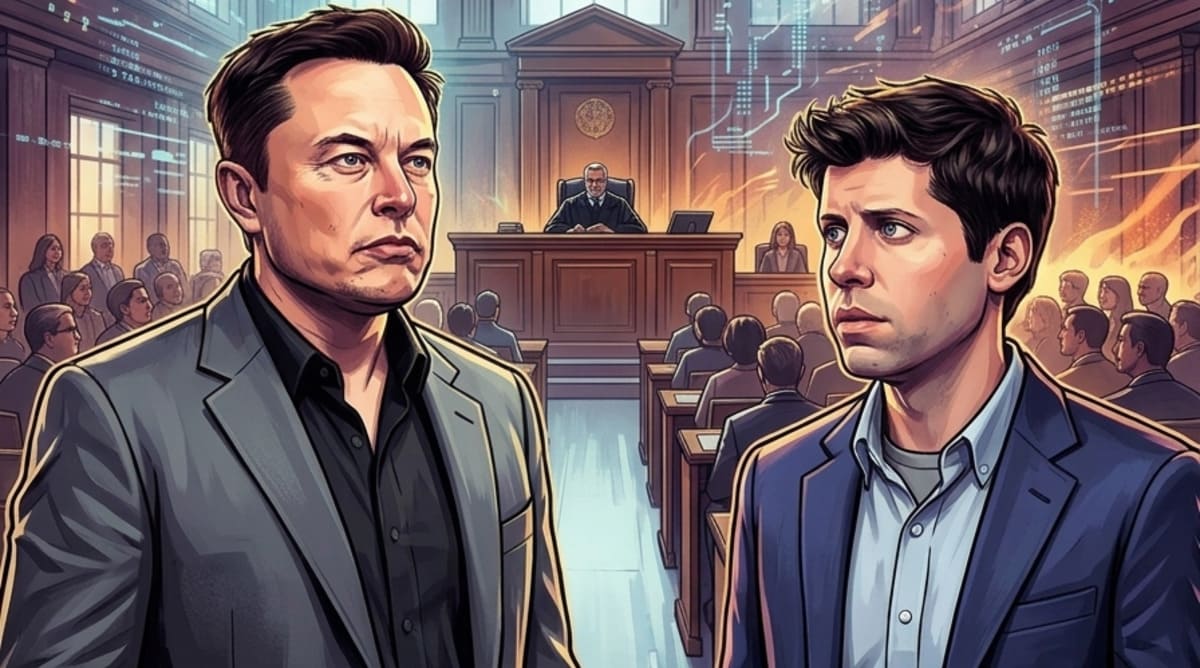
Elon Musk has lost the OpenAI court case after a jury verdict. In a unanimous decision reached after just two hours of deliberation, the Oakland-based jury found that the statute of limitations had lapsed on Musk’s primary claims of breach of charitable trust and unjust enrichment. By determining that the legal timeframe for filing had expired, the jury was not required to rule on the underlying merits of whether OpenAI’s transition from a nonprofit to a commercial powerhouse constituted “charitable looting”.
The three-week trial exposed deep fissures in the founding narrative of OpenAI. Musk had argued that his $38 million in early donations were encumbered by a fiduciary mandate to develop Artificial General Intelligence (AGI) for the public good. However, the defense presented a counter-narrative of historical inconsistency, with CEO Sam Altman testifying that Musk himself had once petitioned for a majority equity stake—as high as 90%—before departing in 2018. Furthermore, while Microsoft CEO Satya Nadella’s testimony confirmed a “commercial pivot” and internal “IBM anxiety,” it ultimately framed the partnership as a necessary strategic evolution rather than a betrayal of trust.
Also Read:
[ LIVE: Musk v. OpenAI Analysis — Satya Nadella Testifies on Microsoft’s ‘IBM’ Anxiety ]
[ Forensic Analysis: The Musk v. OpenAI Trial and the Future of AGI Governance ]
In the wake of the verdict, Musk criticized the decision on X, labeling it a “calendar technicality” and a “free license to loot charities,” while vowing to file an appeal. Legal experts note that overturning such a fact-specific jury decision on appeal remains a significant challenge. Conversely, OpenAI spokesperson Sam Singer hailed the verdict as a “tremendous victory” for the justice system, asserting that the litigation was merely a tactical attempt by Musk to impede a commercial competitor.
The resolution of this case preserves OpenAI’s current hybrid structure and its deep-seated partnership with Microsoft, which had been dismissively labeled “amateur city” regarding its original nonprofit governance. While the “Silicon Schism” between Musk and Altman may continue through the appeals process, the immediate threat of court-mandated divestiture or leadership removal has been neutralized.