

Guide to Managing Your Personal Finances with the New ChatGPT Integration
Following the rollout of specialized AI services for education and healthcare, OpenAI is expanding ChatGPT’s domain to include a comprehensive personal finance experience. This integration allows users to securely synchronize financial accounts and receive personalized, context-aware guidance powered by the advanced reasoning of GPT-5.5.
RMN Digital AI Desk
New Delhi | May 16, 2026
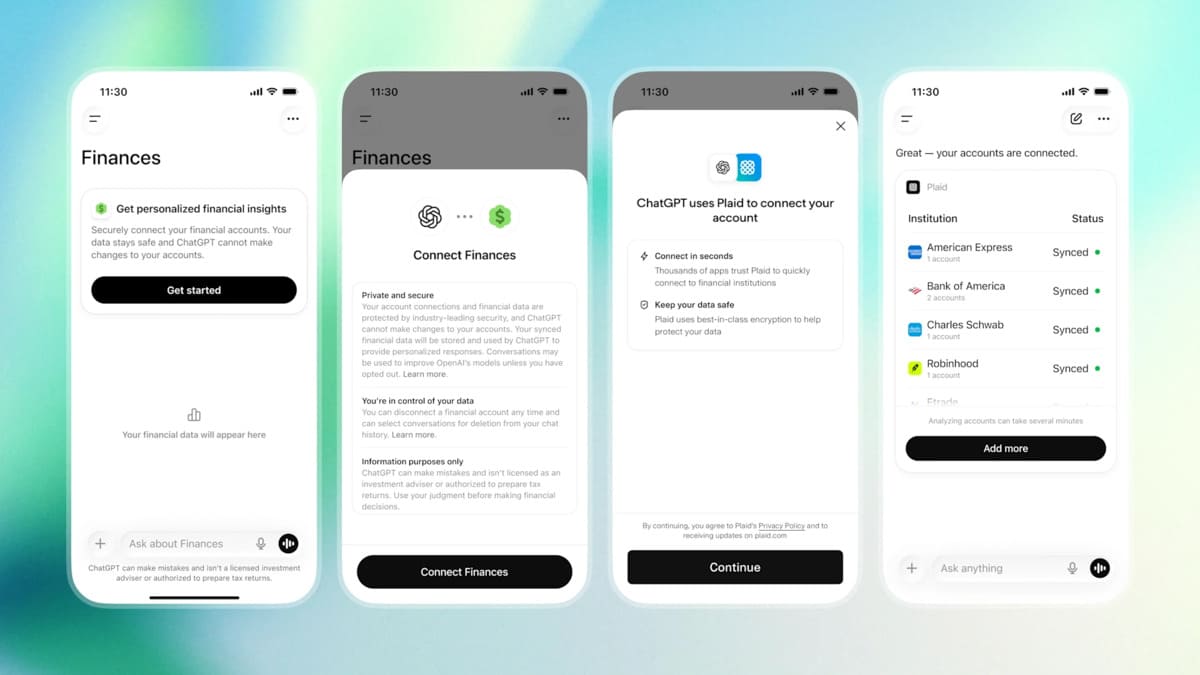
OpenAI has launched a preview of a dedicated personal finance experience within ChatGPT, initially available to Pro users in the United States. This feature addresses the common challenge of managing fragmented financial data across multiple apps, cards, and spreadsheets. By allowing users to securely connect their financial accounts, ChatGPT provides a unified dashboard that tracks spending, portfolio performance, and upcoming obligations while offering reasoning-based insights grounded in the user’s specific financial context.
The service leverages the advanced reasoning capabilities of GPT-5.5 to assist with complex financial tasks such as budgeting, investment comparisons, and long-term goal planning. Unlike traditional financial tools, ChatGPT can combine real-time account data with personal information shared by the user—such as upcoming major purchases or private loan obligations—to provide more complete guidance. These details are stored as “Financial memories,” which help the AI maintain context across multiple conversations to better understand trade-offs and patterns in a user’s financial life.
To get started, users can select the “Finances” option from the ChatGPT sidebar or use the “@Finances” command to link their accounts via Plaid, with Intuit support expected in the future. Once synchronized, the AI can help users take direct action through ecosystem partners; for example, users may receive credit card recommendations with approval odds or estimate tax implications for stock sales through Intuit. While these tools offer significant support for managing money, OpenAI clarifies that the service is intended to help users feel more confident but is not a replacement for professional financial advice.
Privacy and data control are central to the experience. ChatGPT can access balances, transactions, and liabilities to visualize data, but it cannot view full account numbers or perform any changes or transactions on the user’s behalf. Users maintain full control over their data, with the ability to disconnect accounts or delete financial memories at any time. Furthermore, conversations involving connected financial data follow existing privacy models, and temporary chats remain available for users who do not wish to access their linked accounts for a specific session.
The quality of the financial guidance is monitored through a new internal benchmark developed alongside over 50 finance professionals. This evaluation process ensures that the AI can handle the highly context-dependent nature of personal finance, which requires accounting for income, debts, and timing. According to OpenAI’s findings, the GPT-5.5 Pro model achieves the highest performance on these complex reasoning tasks compared to previous iterations.