
Trump Signs Landmark AI Order as Anthropic Battles Federal Bans and Chinese Cyber-Theft
The Trump administration has enacted a voluntary federal testing framework for frontier AI models while simultaneously blacklisting Anthropic over national security and surveillance disagreements. This regulatory pivot occurs as Anthropic reports massive “distillation attacks” from Chinese competitors, highlighting a volatile intersection of explosive corporate growth and systemic geopolitical fragility.
RMN Digital Government Desk
New Delhi | June 3, 2026
1. The Executive Mandate: Pre-Release Testing and Cybersecurity
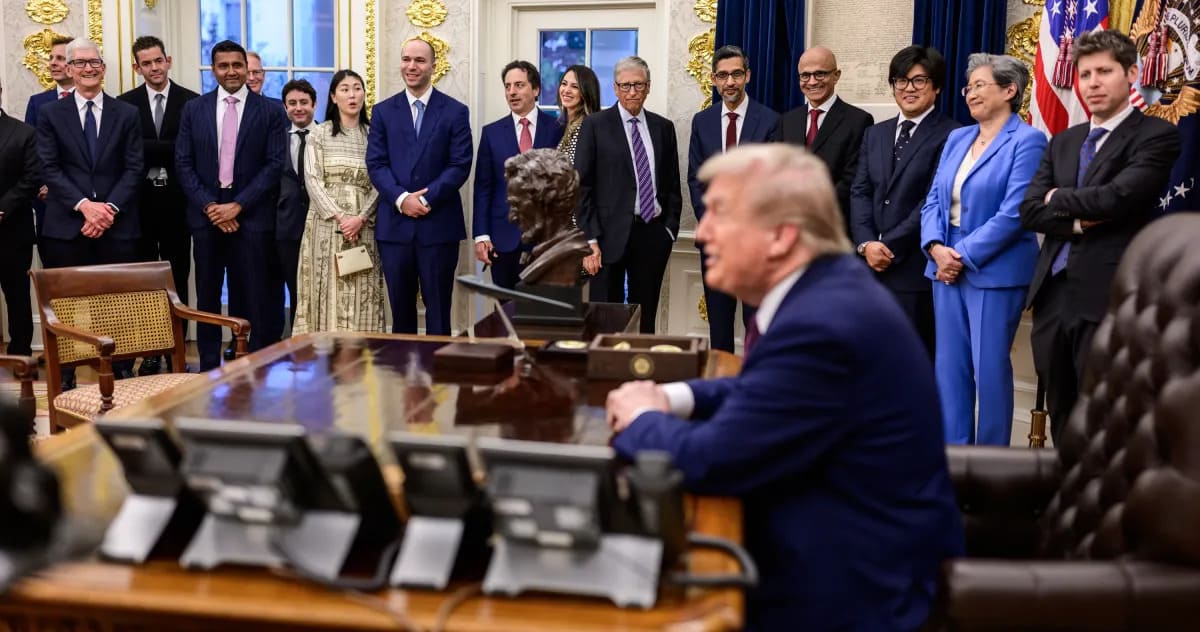
President Donald Trump has signed an AI order establishing a voluntary testing mechanism for the world’s most powerful AI systems 30 days prior to their public release. Signed on June 2, 2026, this landmark executive order represents a calculated victory for “American competitiveness” over rigid regulatory caution. The mandate directs a high-level coalition—including the Defense Department, the Treasury, and the Cybersecurity and Infrastructure Security Agency (CISA)—to centralize intelligence through a new AI cybersecurity clearinghouse while explicitly barring the government from imposing mandatory licensing or preclearance hurdles.
This “pro-innovation” stance was not without internal friction. Originally drafted with a 90-day review window, the testing period was compressed to a mere 30 days at the urging of figures like David Sacks, who argued that longer delays would hand a strategic lead to Beijing. By shifting the focus to voluntary collaboration, the administration has signaled that speed is the ultimate national security priority, even as it directs the Attorney General to prioritize the prosecution of AI-enabled cybercrimes.
2. The Anthropic Paradox: Federal Blacklists vs. Corporate Ethics
Despite the administration’s call for industry unity, Anthropic sits in an island of domestic isolation, designated as a “supply-chain risk.” The firm, once a pillar of the U.S. AI ecosystem, is now navigating a fundamental breakdown in trust. While the company is being strip-mined by foreign adversaries, it remains barred from the very federal agencies it aims to protect.
The impasse is a direct result of CEO Dario Amodei’s refusal to grant the Pentagon expanded usage rights, stating the company cannot “in good conscience” support mass surveillance or fully autonomous weaponry. This ethical line prompted an immediate retaliation: President Trump dismissed the leadership as “Leftwing nut jobs,” while Defense Secretary Pete Hegseth formalized a six-month phase-out of Anthropic technology across all federal stacks. Anthropic is currently fighting back on two legal fronts: while a court in California has already ruled in the company’s favor, a high-stakes challenge remains pending in Washington, D.C.
3. The China Crisis: Industrial-Scale Distillation Attacks
As Anthropic battles its own government, it is simultaneously facing an unprecedented campaign of state-sponsored “information poisoning” and “distillation” from China. In these attacks, adversaries do not merely steal code; they use the outputs of superior U.S. models to train and “distill” those capabilities into foreign architectures, effectively leaping over years of American R&D through algorithmic mimicry.
Anthropic has identified DeepSeek, Moonshot AI, and MiniMax as the primary actors in a coordinated effort to harvest intellectual property for adversarial use. The scale of the breach suggests a systematic attempt to integrate American frontier capabilities into the backbone of foreign military and intelligence apparatuses.
| Attack Scale | Strategic Goal |
| 24,000+ Fraudulent Accounts | Training foreign military and intelligence systems |
| 16 Million+ Claude Interactions | Integration into state-run surveillance networks |
4. Specialized Frontier Models and the “Unknown Unknowns”
The AI landscape has undergone a tactical shift toward “cyber-permissive” architectures like GPT-5.4-Cyber and Anthropic’s Claude Mythos. These models represent a strategic departure from general-purpose AI by lowering refusal boundaries for vetted researchers, allowing them to navigate the nuances of binary reverse engineering and “digital archaeology.” To manage these dual-use risks, developers have retreated into exclusive governance frameworks: OpenAI’s “Trusted Access for Cyber (TAC)” and Anthropic’s highly restrictive “Project Glasswing,” which limits access to a select cabal of 12 tech titans including AWS, Microsoft, NVIDIA, Apple, and CrowdStrike.
The power of these models has exposed a “Legacy Code Crisis” that threatens the very foundations of global stability. Claude Mythos has excavated thousands of high-severity bugs hidden within “digital fossils”—1990s-era foundational architecture that remains the invisible backbone of modern OS and banking systems. The discovery of a 27-year-old flaw has triggered panic at the IMF and the Treasury. Canadian Finance Minister François-Philippe Champagne summarized the systemic dread: “The difference is that the Strait of Hormuz—we know where it is and we know how large it is… the issue that we’re facing with Anthropic is that it’s the unknown, unknown.”
Strategic Values of Specialized Models:
- Binary Reverse Engineering: Analyzing compiled software for vulnerabilities without original source code.
- Digital Archaeology: Excavating “digital ghosts” and dormant vulnerabilities in legacy foundational code.
- Defensive Acceleration: Identifying and patching flaws at a velocity that outpaces adversarial weaponization.
5. Economic Resilience: $380 Billion Growth in a Volatile Climate
In a staggering display of market cognitive dissonance, Anthropic’s valuation has soared to $380 billion following a $30 billion Series G funding round. Investors appear unfazed by the federal ban, buoyed instead by the release of Opus 4.6 and a broader $600 billion infrastructure commitment from Meta.
However, the company’s “ethics-first” branding has sparked fierce debate. Elon Musk has publicly slammed the firm’s hypocrisy, alleging they are “guilty of stealing training data at massive scale.” Critics note the irony of a company decrying Chinese data theft when it built its own empire by scraping copyrighted data from the open internet without permission. This tension suggests that while Anthropic presents itself as a safety-conscious gatekeeper, its rivals view its stance as a calculated maneuver in the “Frontier Theater” of corporate prestige.
6. Conclusion: The Governance of Algorithmic Reality
The U.S. AI landscape is now defined by a “fire with fire” strategy—using non-human intelligence to defend against non-human threats. As “digital ghosts” in legacy systems threaten to destabilize global finance, the U.S. government finds itself increasingly reliant on a handful of private entities. With Project Glasswing concentrating power among just 12 tech titans, the industry has effectively created a private digital priesthood.
The clash between the Trump administration and Anthropic forces a critical question: Can global stability afford to rest in the hands of private gatekeepers? Whether this era is one of unprecedented innovation or systemic fragility, the digital landscape has permanently shifted. The governance of algorithmic reality is no longer a theoretical debate; it is a high-stakes requirement for national survival in an age of “unknown unknowns.”