

OpenAI and MHESI Partner to Launch Eight-Week AI Accelerator for Thai Startups
OpenAI and Thailand’s Ministry of Higher Education, Science, Research and Innovation have launched an eight-week accelerator program to support ten local startups in healthcare and education. The initiative aims to help these startups transition early AI prototypes into secure, reliable, and scalable real-world products. Supported by key national partners, the program will conclude with a Demo Day in November to showcase these homegrown AI solutions.
RMN Digital Small Business Desk
New Delhi | August 30, 2026
Empowering Thailand’s Next Generation of AI Innovation
In a major step for Southeast Asia’s technology landscape, OpenAI and Thailand’s Ministry of Higher Education, Science, Research and Innovation (MHESI) have announced a new AI accelerator program. Operating out of Bangkok, the initiative is designed to help local startups turn early-stage prototypes into fully fledged, real-world products.
This marks OpenAI’s first public-private partnership with the Thai government specifically aimed at nurturing the local startup ecosystem. The program is being delivered in collaboration with prominent national partners, including the National Innovation Agency (NIA), Mahidol University, and Techsauce.
A Fast-Growing Developer Ecosystem
The partnership arrives at a time of massive momentum for AI development in Thailand. The country currently ranks among the top 20 globally for ChatGPT weekly active users. Furthermore, weekly active usage of Codex in Thailand has grown more than 350-fold since the beginning of 2026, placing the country in the top 20 globally for Codex adoption. This rapid growth underscores a strong baseline of local technical talent and a thriving community of builders leveraging AI to write software and design new products.
Tailored Solutions for Local Needs
To address key development priorities, the accelerator’s first cohort is split evenly between two high-stakes fields: five startups focused on medical and wellness AI, and five focused on education. These sectors are critical for Thailand’s future, particularly as an aging population drives the demand for innovative healthcare and independent living solutions, while a digital economy requires stronger learning outcomes to maintain global competitiveness.
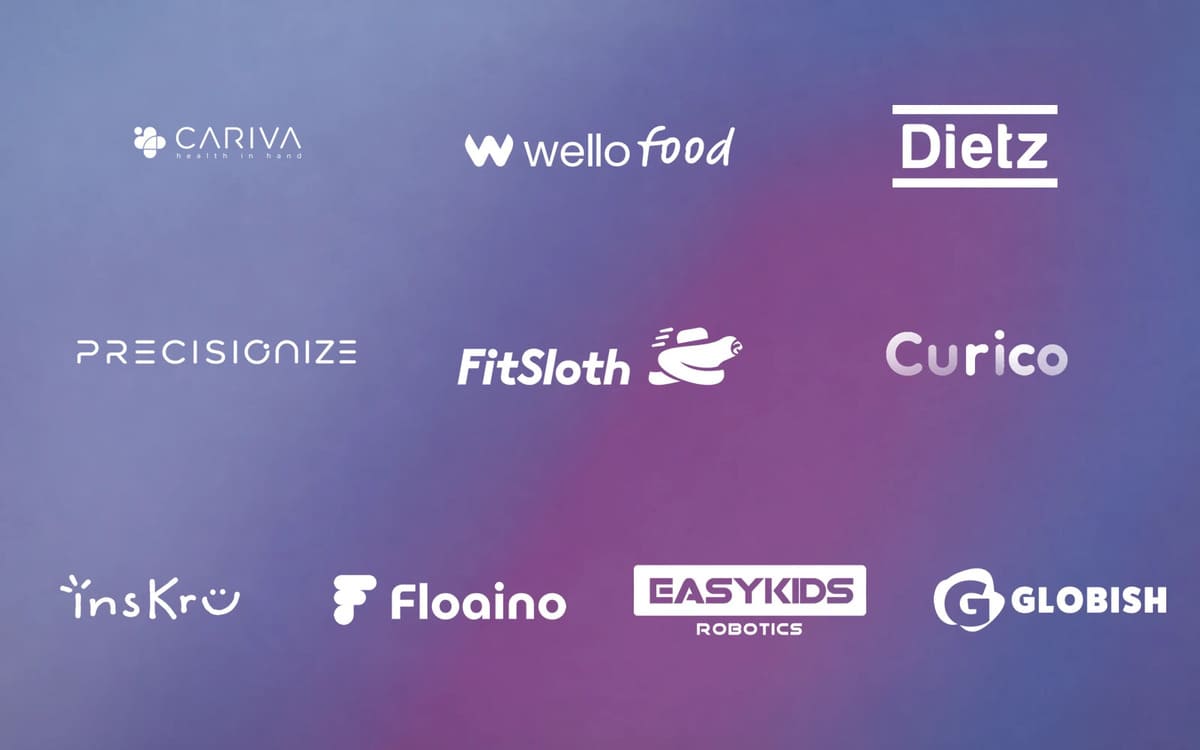
The ten participating startups selected for the program are CARIVA, Wello Food, Dietz, Precisionize, FitSloth, Curico, insKru, Floaino, EasyKids Robotics, and Globish. Handpicked alongside the NIA, the Ministry of Education, and the MHESI innovation network, several of these teams previously participated in the AIAT and OpenAI Codex Hackathon in Bangkok earlier this year.
How the Program Bridges the Prototype-to-Deployment Gap
Building a product that users can depend on—especially in healthcare and education—requires robust safeguards, user feedback, and sustainable business models. Over the course of the eight-week program, founders will work directly with mentors from OpenAI and Thailand’s scientific and technology communities to bridge this gap.
OpenAI is providing substantial resources to each participating team, including:
- US$2,000 in API credits to build on top of OpenAI’s latest frontier models.
- One-on-one technical guidance and a dedicated mentor for the duration of the program.
- Weekly specialized training sessions covering product design, engineering, automated testing, evaluation, responsible AI, privacy, security, cost management, growth, and fundraising.
Additionally, MHESI will connect startups with Thailand’s broader research and talent networks, NIA will link them to the country’s funding and growth ecosystem, and Mahidol University will provide academic mentors.
Each startup is required to set a specific milestone for the program, such as a product pilot or commercial launch. By the conclusion of the eight weeks, they must demonstrate a functional product or significant upgrade, backed by user feedback and evaluation findings.
Spotlight on Innovation: CARIVA and Curico
Among the startups in the cohort, CARIVA is developing a multilingual voice agent designed for hospital phone lines. The AI agent can communicate in a patient’s preferred language to assist with routine tasks like appointment scheduling, while also possessing the capability to identify potential medical emergencies. CARIVA is working with OpenAI during the accelerator to refine evaluation and steering strategies for its real-time speech model, aiming to pilot the capability in a live hospital call flow by the end of the program.
In the education sector, Curico is building AI-powered learning tools for children, families, and teachers. Curico’s goal is to pilot its platform in Bangkok Metropolitan Administration childcare centers with a plan to expand to over 200 centers. The startup also plans to train more than 200 teachers, test AI-assisted grading systems at Chulalongkorn University, and scale its family learning platform to more than 1,000 monthly active users.
Path to Implementation and Global Scaling
The accelerator will culminate in a Demo Day in Bangkok in November. This event will gather investors, government officials, healthcare representatives, and educators to witness the startups’ working products and implementation strategies.
The long-term vision of this partnership is to establish a repeatable model that enables Thai founders to build trusted AI products, helping them scale solutions developed in Thailand to a global market.