

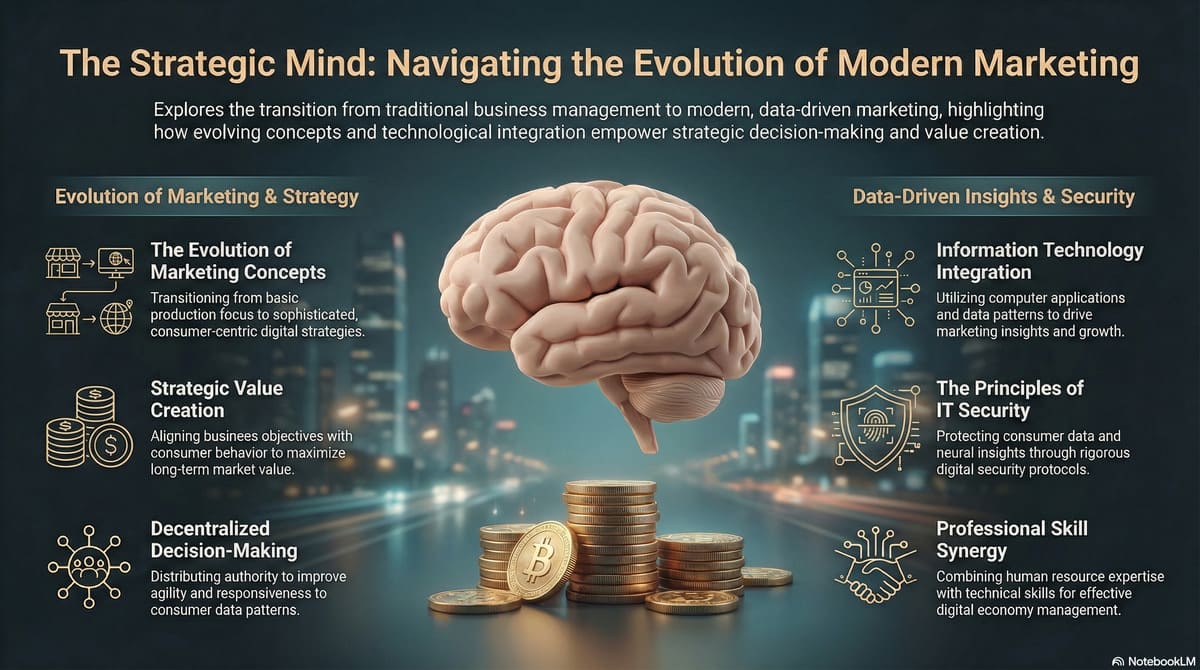
The Strategic Mind: Navigating the Evolution of Modern Marketing
In this article Imrana explains how traditional marketing principles still apply in the modern digital world.
By Imrana
New Delhi | February 6, 2026
Marketing is often misunderstood as advertising or selling. In reality, marketing begins much earlier and runs much deeper. Marketing is the process of understanding people — their needs, wants and behaviour — and then creating value that fits into their lives. It is not about pushing products. It is about solving problems and communicating solutions in the right way, at the right time, to the right people.
At its foundation, marketing connects a business with its audience. It studies what people need, how they think, how they decide and what influences them. Only after this understanding comes promotion. Without research, strategy and planning, marketing becomes noise. With structure, it becomes impact.
This structure is best explained through the five Ps of marketing — product, price, place, promotion, and people. These elements work together. If one fails, the entire strategy weakens.
The first P is product. A product is not just a physical item. It can be a service, an idea or an experience. What matters is value. A product must meet a real need and offer something useful or meaningful. Design, quality, features and even packaging shape how people perceive a product. If the product itself is weak, no amount of promotion can save it.
The second P is price. Price reflects value, but it also sends a message. A price that is too high can create distance, while a price that is too low can damage trust. Pricing is influenced by costs, competition, and customer expectations. In digital markets, people compare prices instantly. This makes fair and transparent pricing more important than ever.
The third P is place. Place refers to where and how a product reaches people. In the past, this meant physical stores. Today, place includes websites, apps, online platforms, and delivery systems. Accessibility matters. If a product is hard to find or difficult to use, people move on quickly. Digital access has made convenience a basic expectation, not a luxury.
The fourth P is promotion. Promotion is how a brand communicates with its audience. This includes advertising, public relations, social media, content, and campaigns. Promotion should inform and engage, not manipulate. Clear messaging builds trust. Loud messaging does not. In the digital world, promotion must respect attention spans and intelligence.
The fifth and most crucial P is people. People include customers, employees, creators, and communities. Every interaction shapes the brand image. Marketing is not only external; it is internal as well. A brand that does not respect its people cannot expect loyalty from its audience.
Imrana’s Insight Podcast on Modern Marketing
These five Ps do not operate separately. They form a system. In the digital age, this system has evolved into digital marketing.
Digital marketing applies marketing principles through digital platforms such as search engines, social media, email, websites, and mobile apps. What makes digital marketing different is data. Every click, view, and interaction can be measured. This allows brands to refine strategy in real time.
Content is the core of digital marketing. Content includes posts, videos, blogs, ads, and visuals. Good content educates before it persuades. It respects context and relevance. Poor content only chases attention. In digital spaces, content quality decides credibility.
Search engine optimization, or SEO, plays a major role. SEO helps content reach the right audience through search engines. It uses keywords, structure, and relevance. When used responsibly, SEO improves access to useful information. When abused, it promotes misleading content. Visibility should never come at the cost of truth.
Social media marketing relies heavily on algorithms. These systems prioritize engagement, not importance. This pushes brands to create fast, emotional content. While engagement matters, ethics matter more. Digital marketing should aim for clarity, not confusion.
Influencer marketing has grown rapidly because it feels personal. Influencers hold trust, and that trust carries responsibility. Paid partnerships must be disclosed clearly. Blurred lines damage credibility and harm audiences.
Digital marketing also depends on analytics and data. Data helps understand behaviour, improve experience, and personalize communication. But data without consent is exploitation. Privacy is not optional. Respecting user data is part of ethical marketing.
In essence, digital marketing is not separate from marketing. It is marketing adapted to modern behaviour. The tools have changed, but the purpose remains the same — to understand people and create value.
Marketing works best when it is honest, structured, and human. The five Ps provide the foundation. Digital platforms provide the reach. Responsibility provides the balance.
Marketing is not about control. It is about connection. And in a digital world, that distinction matters more than ever.
This article has been written exclusively for RMN Digital by Imrana, who is a student specializing in multiple domains such as business, trade, education, technology, entertainment, and politics.
She also produces Imrana’s Insight podcast program on diverse topics and Imrana’s Tech Talk podcast program on tech applications.
You can click here to read more articles by Imrana. You can also click here to know more about Imrana’s editorial and humanitarian work.