
Digital Past and Present: From Standalone Computers to the Age of AI
In this article, Imrana explains the evolution of technology that is poised to transform the way people work and live in a connected world.
By Imrana
Computers have changed the world quietly but deeply. What started as simple machines used only for calculations have now become intelligent systems that can write, design, analyse and even talk like humans. The journey of computers from the past to the present shows how technology grows step by step, shaped by human needs, ideas, and communication. Today, computers are not just tools. They are partners in work, learning, and daily life.
In the early days, especially during the 1980s, computers were mostly standalone machines. This means they worked alone and were not connected to each other. People used them mainly for basic tasks such as typing documents, storing data, and simple calculations. There was no internet, no cloud and no instant sharing. Software was limited, hardware was slow and storage was small. Computers were powerful for their time, but their role was narrow and controlled.
The big change came in the mid-1990s with the rise of the internet. Computers stopped being isolated machines and became connected devices. Communication became the centre of computing. Email, websites, and online data sharing changed how people worked and learned. This period marked the shift from simple information technology (IT) to information and communication technology (ICT). Computers were no longer just for processing information, but also for connecting people across the world.
Imrana’s Insight Podcast on Digital Past and Present
As computers evolved, their main parts became more defined. Hardware refers to the physical parts such as the processor, keyboard and memory. Software includes operating systems and applications that tell the hardware what to do. Firmware works between hardware and software to control basic functions. Communication systems, like networks and the internet, allow computers to share data. Together, these parts form the modern computing system we depend on today.
The development of processors also played a major role. Early chips were slow and could handle only one task at a time. Over the years, processors became smaller, faster and more efficient. This allowed computers to support complex software, graphics, and multitasking. Today, a small chip can perform millions of operations in seconds. This progress made advanced technologies, including artificial intelligence, possible.
Software also changed with time. Earlier, most software was paid and closed-source. Now, open-source software has become important. Open-source programs are free to use and improve, and they encourage collaboration. Operating systems like Linux and tools like LibreOffice show how community-driven software can be stable and powerful. At the same time, popular tools such as Google Docs and Microsoft Word made word processing easier and more collaborative.
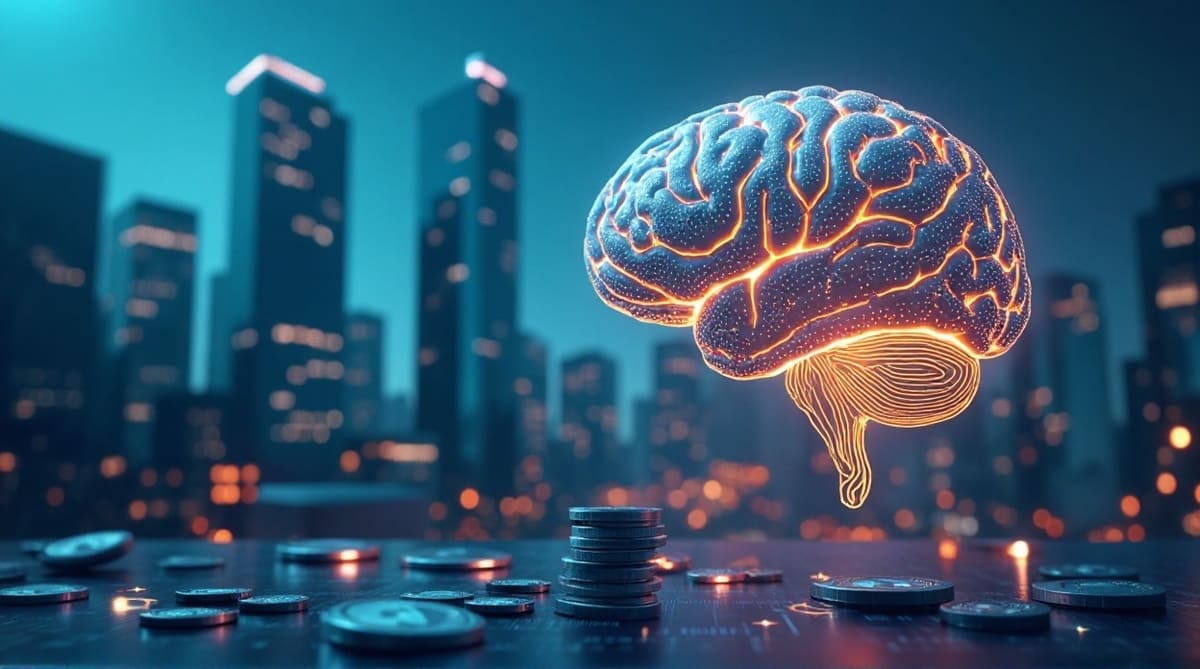
In recent years, artificial intelligence has become the most talked-about area of computing. AI systems can analyse data, understand language, and support decision-making. Different companies are leading this space in different ways. OpenAI developed ChatGPT, Microsoft introduced Copilot, Google launched Gemini, Meta built its own AI tools, and X (formerly Twitter) introduced Grok. These systems are not just experiments. They are already used in education, offices, and creative work.
This shift shows how computing is moving from tools that follow instructions to systems that assist thinking. AI is still narrow, meaning it is designed for specific tasks. However, discussions about artificial general intelligence (AGI) suggest a future where machines may perform a wide range of human-like tasks. While this future is uncertain, the speed of progress is clear and fast.
Looking back at history helps us understand the present better. Computers were once rare, expensive and difficult to use. Today, they are common, connected and increasingly intelligent. The focus has moved from hardware power to smart software and data. Communication, automation, and intelligence now define modern computing.
In the end, the story of computers is a story of connection and growth. From standalone machines to internet-connected systems and now AI-powered tools, each stage reflects human needs and innovation. The future of computing will likely continue this path, becoming more integrated into everyday life. Understanding this journey helps us use technology wisely, not as something to fear or praise blindly, but as a tool shaped by human choices.
This article has been written exclusively for RMN Digital by Imrana, who is a student specializing in multiple domains such as business, trade, education, technology, entertainment, and politics.
She also produces Imrana’s Insight podcast program on diverse topics and Imrana’s Tech Talk podcast program on tech applications.
You can click here to read more articles by Imrana. You can also click here to know more about Imrana’s editorial and humanitarian work.