

LG Electronics CEO Targets Profit-Driven Growth with Triple-Pillar Strategy and 40 Percent Investment Surge
LG plans to strengthen its profitability by evolving from digital transformation (DX) to AI transformation (AX). By integrating AI end-to-end across operations, the company aims to increase overall productivity by 30 percent within the next two to three years.
RMN Digital Corporate Desk
New Delhi | January 10, 2026
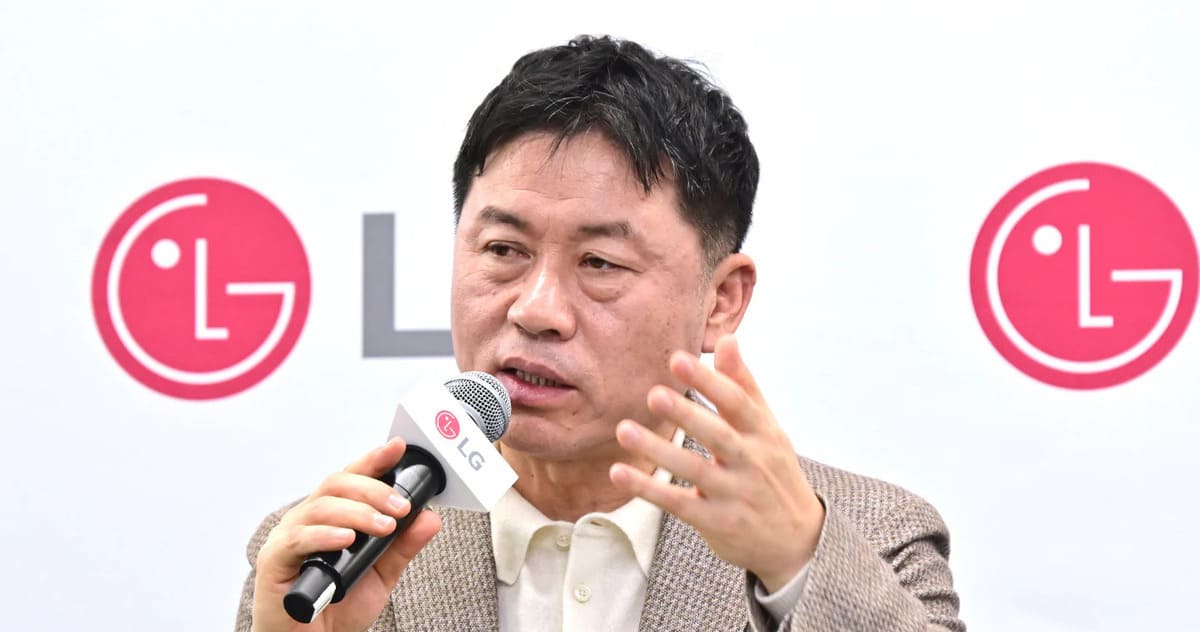
LAS VEGAS, Jan. 7, 2026 — LG Electronics (LG) CEO Lyu Jae-cheol has unveiled a comprehensive strategic roadmap designed to secure a “winning competitive advantage” through speed, flawless execution, and a shift toward high-performance business models. Speaking at a press briefing in Las Vegas, Lyu emphasized that simply matching the pace of competitors is no longer sufficient in an era of rapidly changing technological cycles and industry boundaries.
A Strategy Built on Three Pillars
To navigate this shifting landscape, LG is implementing a strategy centered on three key pillars: reinforcing fundamental competitiveness, accelerating the transition to a high-performance portfolio, and strengthening a profitability-based growth structure.
To bolster fundamental competitiveness, LG is focusing on Quality, Cost, and Delivery (QCD) excellence and deepening its “Winning Tech” to widen the gap with competitors. A newly established Innovation Drive Division, reporting directly to the CEO, will serve as a control tower to oversee these improvements across development, manufacturing, and the supply chain.
Shifting to High-Performance Portfolios
A central component of LG’s future involves moving away from a traditional hardware-centric model toward a high-performance portfolio. This includes:
- B2B Expansion: Growth in vehicle solutions—expected to see record performance this year—and HVAC systems, specifically cooling solutions for AI data centers.
- Non-Hardware Platforms: Scaling the webOS platform, which now powers over 260 million devices, and expanding the product subscription model, which has surpassed KRW 2 trillion in annual revenue.
- Direct-to-Consumer (D2C): Boosting online sales through direct channels.
The success of this shift is already evident; these high-growth areas increased from 29 percent of revenue in 2021 to 45 percent in late 2025, accounting for approximately 90 percent of the company’s operating profit during that period.
AI Transformation (AX) and Productivity
LG plans to strengthen its profitability by evolving from digital transformation (DX) to AI transformation (AX). By integrating AI end-to-end across operations, the company aims to increase overall productivity by 30 percent within the next two to three years.
Internal operations are already utilizing LGenie, an AI agent platform integrated with global technologies like Microsoft Azure AI, OpenAI’s ChatGPT, and Google’s Gemini. This shift is designed to allow employees to focus on higher-value innovation and professional expertise.
Aggressive Investment for Future Growth
Despite global economic uncertainties, LG is significantly increasing its commitment to future growth. The company plans to raise future-growth investment by more than 40 percent year-on-year. These resources—funded in part by the IPO of LG Electronics India—will be concentrated on AI Home, smart factories, robotics, and AI data center cooling.
LG’s transition from DX to AX can be understood as the difference between a library and a personal researcher. While digital transformation (DX) organized the information into accessible “books” or data points, AI transformation (AX) acts as a specialized researcher that instantly connects all that information to execute complex tasks and provide immediate, autonomous solutions.