
By Rakesh Raman
Tech’s chattering classes whispered and government corridors went abuzz with excitement when the Indian government took a decisive step early this month to revive the ailing National Informatics Centre (NIC), a colossal organization responsible to introduce technology in government departments.
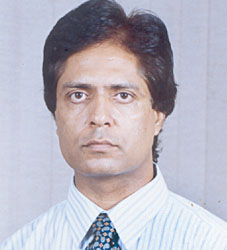
M. Moni, who was working as a deputy director general in NIC, was promoted as the director general (DG) with a view to bring some respectability to the tech implementation agency, which has almost gone defunct. And he has been given just one month to clear the mess that has piled up during the past four decades. Government has given the DG’s post to Moni for just one month, expiring on May 31.
How will he do and what will he do in this one month? Set up in the year 1976 to make India a tech-driven country, NIC was supposed to introduce computerization in government departments. But despite its mammoth size and after wasting huge public money, NIC kept buying and distributing computers while computerization has always been missing.
It was a totally flawed concept right from the beginning because Indian government departments are “owned” by the gangs of shady politicians and naive bureaucrats who run these departments as their personal property. Why would they share any control with NIC-supplied computers? They won’t; and they didn’t.
As a result, NIC kept squandering public money worth billions of dollars in the name of e-governance projects, but the poor Indian citizens have yet to see any governance, let alone e-governance. Even a layperson can see NIC’s shoddy work that it has done in the Indian government departments.
For example, when the world has moved to advanced technologies like Responsive Web Design (RWD) and the next-generation Collaborative Web, most government websites (even NIC’s own website) are using static web techniques that emerged and went obsolete in the 1990s. There are hardly any e-governance or citizen services being delivered through these sites, which don’t even get updated.
NIC’s thousands of employees who are like digital parasites could never stay up-to-date with their skills in the fast-moving tech arena and today they look like some primitives from the Stone Age trying to survive in the Digital Age. They lack communication skills, they lack presentation skills, and, strangely, they lack tech skills.
Can Moni, the new DG, make such a white elephant dance? It’s believed that Moni has been made NIC’s DG because of his small demonstrable feats for technology introduction in India’s agriculture sector including the management of online AGMARKNET, a web-driven network for farmers. Such projects are like a figure among ciphers for NIC.
Since technology introduction for the masses or online citizen services is among the most important objectives of NIC, observers believe that Moni will be able to emulate the tech models that he used for agriculture informatics for other areas of operations in NIC.
Perhaps, government would have considered Moni’s Dalit (lower-caste untouchables) social status also while appointing him as the DG, as Indian government is believed to be working for the upliftment of Dalits, though all human beings are supposed to be equal in an egalitarian society.
Now, if Moni is given a free hand and a long leg in NIC, he has a challenging task ahead. He will have to work for the total transformation of NIC – including augmentation of tech infrastructure, upgradation of workforce skills, process creation for delivering citizen services, and so on.
More importantly, he will have to make NIC an accountable organization because it is consuming large amounts of public money. Can he do that? Time will tell.
By Rakesh Raman, the managing editor of RMN Digital.
You can also read: More Articles by the RMN Editor, Rakesh Raman